Iliberty For Mac
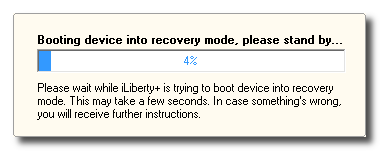
Installing and maintaining a Liberty offering using Installation Manager on Mac OS X is supported for the following offerings: IBM WebSphere Application Server. Our new VPN manager for Mac OS is compatible with Mac OS 10.7 (Lion) and above. Download our VPN.
Loyola epic remote access. In addition, check or reset your router's firewall (toggle it off, and test the connection), and also update your router's firmware to its latest version.
Matches string against pattern, returning zero if itmatches, FNM_NOMATCH if not. pattern may contain thewildcards ? to match any one character, * to match anyzero or more characters, or a set of alternate characters in squarebrackets, like ‘[a-gt8]’, which match one character (athrough g, or t, or 8, in this example) if that onecharacter is in the set. A set may be inverted (i.e., match anythingexcept what’s in the set) by giving ^ or ! as the firstcharacter in the set. To include those characters in the set, list themas anything other than the first character of the set. To include adash in the set, list it last in the set. A backslash character makesthe following character not special, so for example you could matchagainst a literal asterisk with ‘*’. To match a literalbackslash, use ‘’.
flags controls various aspects of the matching process, and is aboolean OR of zero or more of the following values (defined in<fnmatch.h>):
FNM_PATHNAMEFNM_FILE_NAMEstring is assumed to be a path name. No wildcard will ever match/.
FNM_NOESCAPEDo not interpret backslashes as quoting the following special character.
FNM_PERIODA leading period (at the beginning of string, or ifFNM_PATHNAME after a slash) is not matched by * or? but must be matched explicitly.
' '.: -;: =., ' ^ ' ^ ',: # ', -: ^.= = #. #.=, ',:: -: - #; =, ' =., '. Libfidtrack. # ' ^ #: ^; # =; -; ^ ^ - '.
FNM_LEADING_DIRMeans that string also matches pattern if some initial partof string matches, and is followed by / and zero or morecharacters. For example, ‘foo*’ would match either ‘foobar’or ‘foobar/grill’.
FNM_CASEFOLDIgnores case when performing the comparison.
From 2001 to 2012, OS X was code-named internally (for development purposes) after big cats. Becuase Apple marketing was also using those code-names to promote OS X publicly, however, the company's development crew switched their internal naming structure to wines beginning with OS X 10.3 — publicly known as Panther, privately as 'Pinot.' (Apple did make one exception for OS X 10.6, which never had a code-name beyond Snow Leopard.)
Though Apple's external code-names for OS X switched to California places in 2013, the internal code-names remained wine-based until 2014. In 2015, the development team switched to types of apples, with OS X 10.11 El Capitan (AKA 'Gala').
In 2016, OS X officially became macOS, though Apple continued using California places as the external code names, and apple types as the internal code names. So far, this has remained the internal code name across the board.
- OS X 10 beta: Kodiak
- OS X 10.0: Cheetah
- OS X 10.1: Puma
- OS X 10.2: Jaguar
- OS X 10.3 Panther (Pinot)
- OS X 10.4 Tiger (Merlot)
- OS X 10.4.4 Tiger (Intel: Chardonay)
- OS X 10.5 Leopard (Chablis)
- OS X 10.6 Snow Leopard
- OS X 10.7 Lion (Barolo)
- OS X 10.8 Mountain Lion (Zinfandel)
- OS X 10.9 Mavericks (Cabernet)
- OS X 10.10: Yosemite (Syrah)
- OS X 10.11: El Capitan (Gala)
- macOS 10.12: Sierra (Fuji)
- macOS 10.13: High Sierra (Lobo)
- macOS 10.14: Mojave (Liberty)
Apple's code names
Main
U.S. and Afghan forces successfully captured insurgents using an iPhone app
When their specialist kit failed, soldiers turned to an iPhone to get the job done.